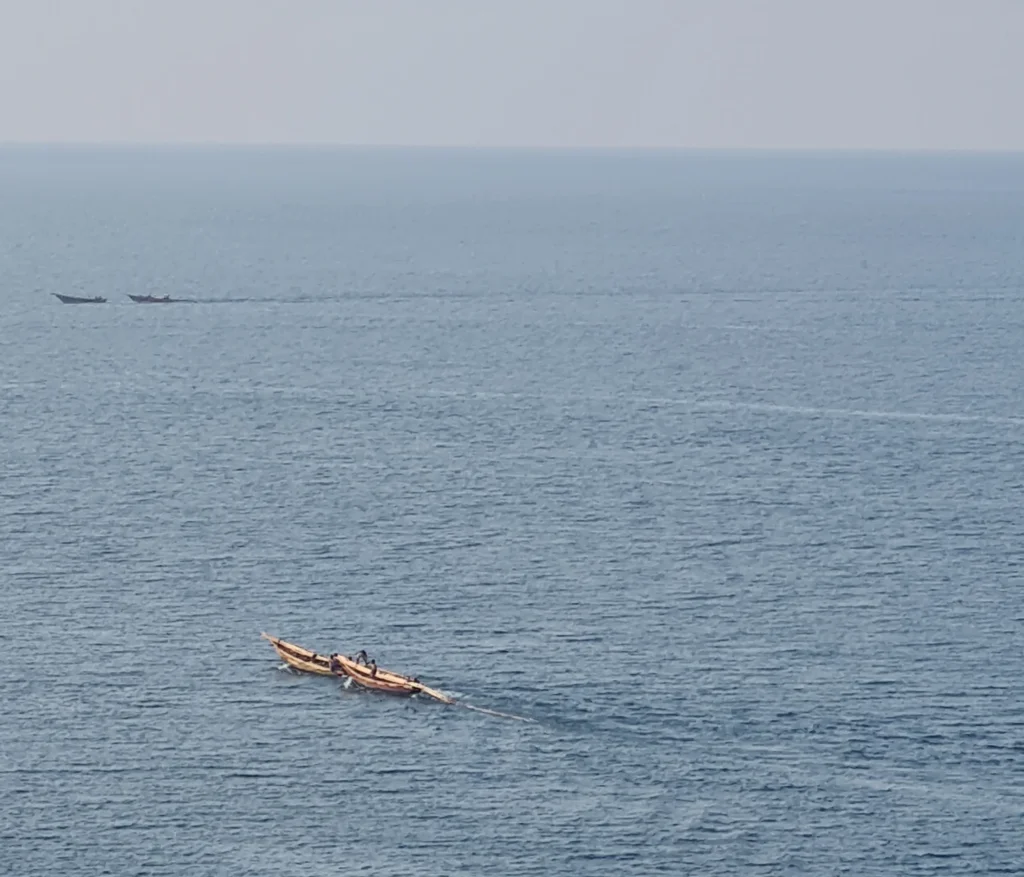
According to the Guinness World Records, Tanganyika holds the record as the longest freshwater lake on the planet, stretching a remarkable 673 kilometers. Its width, however, varies from 16 to 72 km, giving it a characteristic narrow and elongated shape. But the surprises don’t stop at the surface. Venturing into its dark waters, Tanganyika reaches a
maximum depth of approximately 1,470 meters (with an average of 570 meters), making it the second deepest lake on Earth, surpassed only by the legendary Lake Baikal in Russia. This abyss holds nearly 19,000 cubic kilometers of water, equal to about 16% of all the available liquid freshwater on the surface of our planet.
Birth in the Rift Valley
How was a water basin with such a bizarre shape, like an immense flooded canyon, created? The answer lies in the internal dynamics of the Earth. Tanganyika is a lake of tectonic origin, situated at the southern end of the western Rift Valley. The geological isolation that lasted millions of years and the extreme depth have transformed Lake Tanganyika into an evolutionary laboratory without equal. Currently bathing the coasts of four nations (Burundi, Democratic Republic of the Congo, Tanzania, and Zambia), the lake hosts over 2,000 animal and plant species.
The most staggering fact is that more than half of these species are endemic, meaning they exist nowhere else in the world. The true protagonists of this biodiversity hotspot are the fish of the cichlid family, with over 250 different species known for their spectacular colors and complex social bonds.
The Challenge for the Future
Today, this invaluable natural heritage is facing crucial challenges. Climate change, the increasing demographic pressure along the coasts, pollution, and intensive fishing threaten the delicate balance of the lake. Protecting Tanganyika means going far beyond safeguarding a geographical record: it means preserving a fundamental water reserve and a treasure trove of biodiversity unique in the history of our planet.
And you, did you know the story of Lake Tanganyika?