
Imagine waking up to a thin mist caressing the surface of Lake Tanganyika, the second deepest and oldest lake in the world. From the shore of Kigoma, the water does not look like a lake; it has the breath, motion and vastness of a gentle ocean. Our boat trips begin like this: with the rhythmic sound of the engine cutting through the glass-like surface, while the coast recedes, revealing beaches of fine white sand framed by lush vegetation.
Sailing with Karibu Kigoma means discovering secret bays where the water is so clear that you can see the bottom metres below. Here lies a hidden treasure: hundreds of species of cichlid fish, with vibrant colours and bizarre shapes, which have made this basin a world-famous laboratory of evolution. Putting on a mask and snorkel is like entering a living aquarium, where life teems among the submerged rocks.
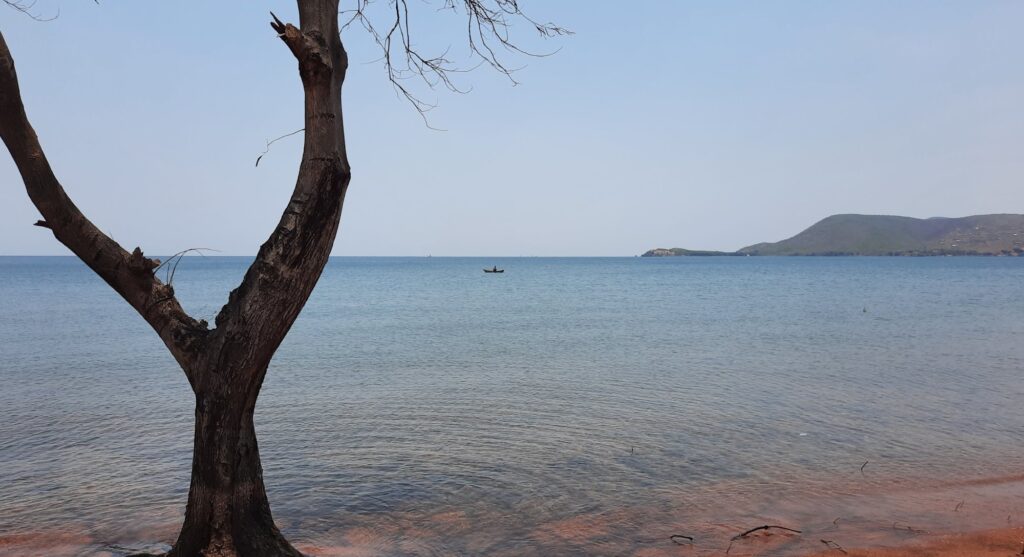
But the real magic happens at sunset. As the sun dips behind the Congo mountains on the horizon, painting the sky purple and orange, hundreds of tiny lights begin to appear. These are the lamps of the ‘dagaa’ fishermen on their traditional boats. This floating “field of stars” is an age-old choreography that tells the story of the symbiosis between man and water. Spending a day on the lake is not just leisure; it is a rite of passage, a way to slow down your heartbeat and tune into the slow rhythms of deep Tanzania. It is the promise of a horizon that never ends.